New Customers Get 10% Off – Use Code: LUX10

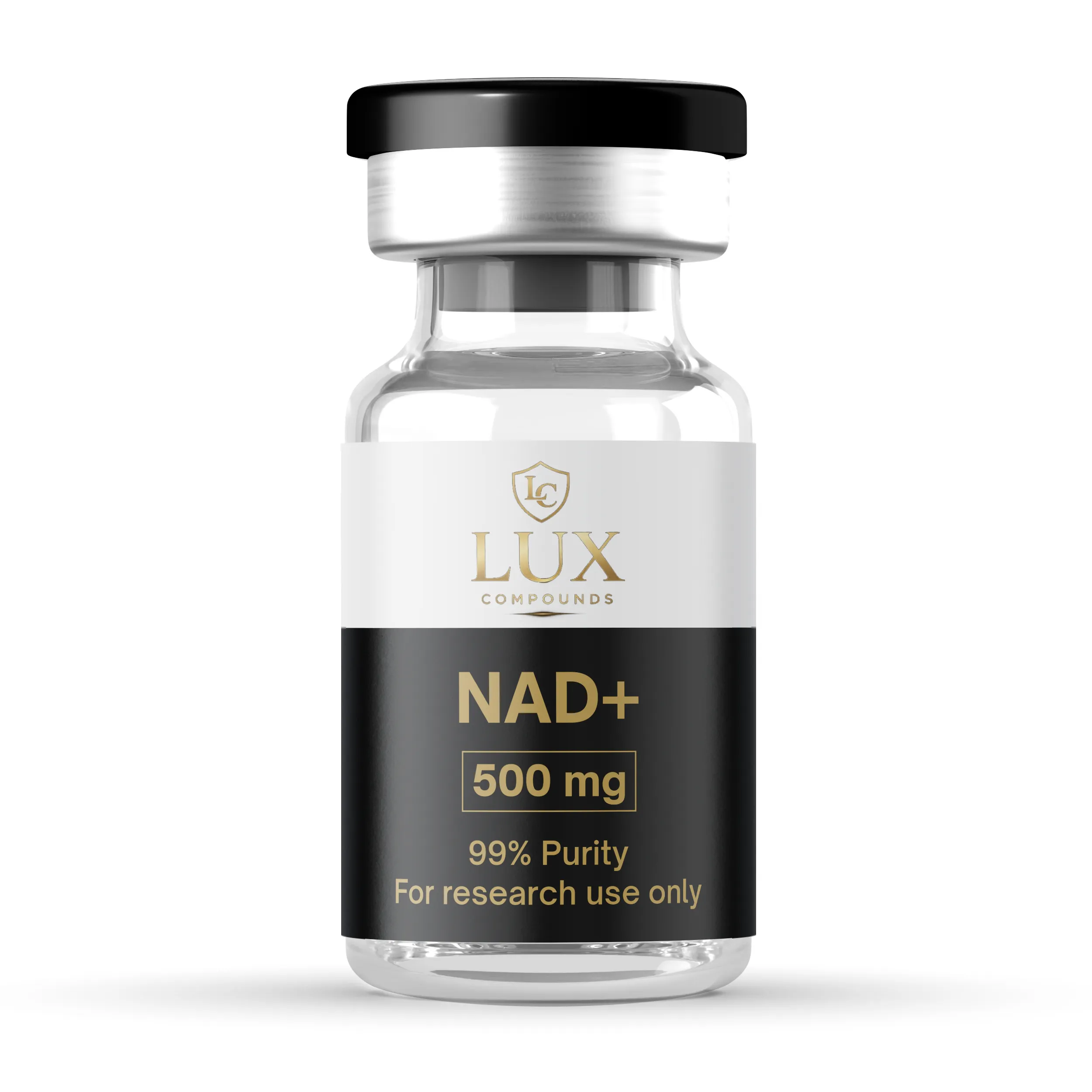
NAD+

5.0 Reviews

Beta-NADCoenzyme INicotinamide Adenine Dinucleotide

A dinucleotide coenzyme central to sirtuin activity and mitochondrial electron transport, studied for its role in cellular redox and metabolic pathways in research models.

All products currently listed on this site are for research purposes only.

Price range: $58.49 through $110.00

2 Day FAST Shipping

99%+ Purity Tests

Ships from USA

USA Lab Tested

We accept :

Certificate of Analysis

Third Party Tested by Freedom Diagnostics

How NAD+ Works

The Science, Simplified

The Master Coenzyme for Cellular Metabolism

NAD+ is a critical dinucleotide coenzyme found in every living cell. It serves as an essential electron carrier in the mitochondrial electron transport chain, involved in ATP synthesis and cellular redox balance.
Key insight: Research indicates that NAD+ levels decline in aging research models, at which point mitochondria enter a “pseudohypoxic” state. In cellular research models, NAD+ exposure has been observed to influence mitochondrial-nuclear signaling pathways, an active area of metabolic research.

Sirtuin & "Longevity Gene" Activation

NAD+ is the mandatory substrate for Sirtuins (SIRT1-7), a family of enzymes that regulate aging, DNA repair, and inflammation.

Key insight: Without sufficient NAD+, sirtuins remain inactive. In research models with elevated NAD+ levels, sirtuin-dependent pathways linked to genomic stability have been observed, as sirtuins use NAD+ to activate these regulatory pathways.

DNA Repair & PARP Enzymes

NAD+ fuels PARPs (poly-ADP-ribose polymerases), which are enzymes tasked with detecting and repairing damaged DNA.

Key insight: Constant DNA repair is a metabolically demanding process that consumes significant amounts of NAD+. In research models, NAD+ availability has been linked to genomic integrity under environmental stress conditions, a subject of ongoing study.

Research Handling Notes

What research literature describes

NAD+ is an endogenous molecule, meaning it occurs naturally in living cells, a property noted in research literature on handling and stability.

🧿 Laboratory Handling Notes

35%

Store lyophilized at -20°C

standard

40%

Reconstitute with bacteriostatic water for laboratory use

standard

25%

Protect from light

standard

Handling Advantage

Endogenous Recognition

Compound Information

Technical specifications for each component

🔬 Molecular Profile

NAD+ Structure

CAS Number

53-84-9

Molecular Formula

C21H27N7O14P2

Molecular Weight

663.43 g/mol

Type

Dinucleotide coenzyme

Components

Nicotinamide + Adenine + Ribose + Phosphate

🧊 Storage Requirements

Stability Information

Stability and storage requirements

Powder Form

Store at -20°C

and protect from light.

Liquid Form

Use promptly;

unstable at room temperature.

Shelf Life

24 months

if kept frozen and sealed.

📊 Physical Properties

Handling & Storage

Stability and storage requirements

Appearance

White to off-white powder

Solubility

Freely soluble in water

Storage (powder)

-20°C, protected from light

Solution stability

Use promptly, refrigerate

Frequently Asked Questions

Common questions about NAD+

Age is a primary factor studied in this research—biological samples show a marked decline in NAD+ levels over time. Chronic inflammation, high oxidative stress, and DNA damage also act as "NAD+ sinks" in these research models, drawing down cellular NAD+ pools faster than they can be replenished.
NMN and NR are "precursors"—molecules used in metabolic pathways to synthesize NAD+. In research, using NAD+ directly allows for a more direct observation of the coenzyme’s effects without depending on conversion enzymes, which can vary between research models.
Because it powers sirtuins. Sirtuins are studied as regulators of gene expression and DNA repair processes. Since sirtuins cannot function without NAD+, this coenzyme is a central focus of research into sirtuin-dependent genomic regulation pathways.
This is a major area of current research. While larger molecules often face barriers entering brain tissue, some studies suggest that NAD+ or its metabolites may influence neuroinflammatory signaling pathways in research models, possibly through secondary signaling mechanisms.
No. NAD+ is currently classified as a research compound and is not approved by regulatory agencies for any medical use. It is sold strictly for laboratory and research evaluation.

Sources & References

Peer-reviewed research

Not for human consumption. This product is sold exclusively for research and educational purposes. It is not intended to diagnose, treat, cure, or prevent any disease.

All research data and findings presented on this page are sourced from peer-reviewed journals and official publications. They are provided for educational reference only and should not be interpreted as medical advice or product claims.

By purchasing this product, you confirm that you are a qualified researcher and will use it in accordance with all applicable laws and regulations.
