5.0 Reviews
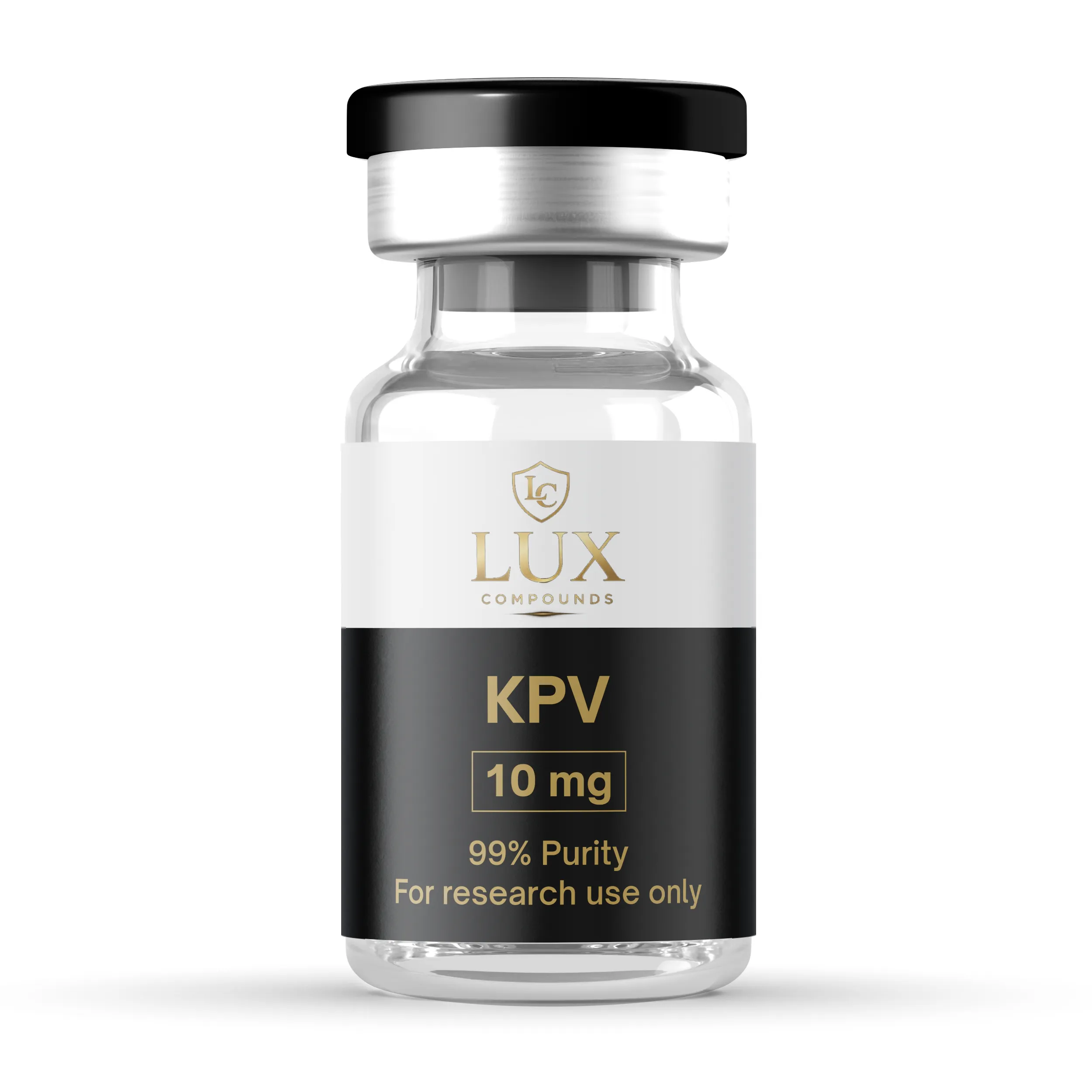
Alpha-MSH (11-13)CAS: 67727-97-3Lysine-Proline-Valineα-MSH C-Terminal Fragment
A 3-amino acid tripeptide (Lys-Pro-Val) derived from the C-terminus of alpha-melanocyte-stimulating hormone that inhibits NF-κB activation via PepT1-mediated cellular uptake in preclinical inflammatory research models. Premium Research Peptide.
All products currently listed on this site are for research purposes only.
$53.99 Original price was: $53.99.$49.50Current price is: $49.50.
We accept :

Third Party Tested by Freedom Diagnostics
The Science, Simplified
Key insight: Landmark gastrointestinal studies show that PepT1 expression naturally spikes during active intestinal inflammation. This means KPV preferentially accumulates right where tissue damage is occurring. Once inside, it actively restores tight junction integrity (claudin/occludin proteins), reducing mucosal permeability—making it an elite subject for “leaky gut,” Crohn’s, and Ulcerative Colitis research.
Key insight: Because KPV is stripped down to just three amino acids (Lysine-Proline-Valine), it retains 100% of the anti-inflammatory power of $\alpha$-MSH but lacks the pigment-inducing activity. Researchers can study its systemic anti-inflammatory properties without inducing melanocortin-receptor pigmentation activity or structural hormonal fluctuations.
What preclinical and cell studies report
As an ultra-short fragment of a naturally occurring human hormone, KPV has demonstrated excellent structural safety in laboratory settings.
🧿 Reagent Handling Guidance
Store Lyophilized at -20°C
lab use
Reconstitute for Lab Use
lab use
Protect From Light
lab use
Safety Advantage
Non-Steroidal Path
Technical specifications for this anti-inflammatory tripeptide
🔬 Molecular Profile
What Is KPV?
Type
Synthetic tripeptide
Sequence
Lys-Pro-Val (KPV)
Amino acids
3
Molecular formula
C₁₆H₃₀N₄O₄
Molecular weight
342.43 g/mol
CAS Number
67727-97-3
Origin
α-MSH residues 11-13
🧊 Storage Requirements
Stability Information
Lyophilized (powder
-20°C long-term
Reconstituted
2-8°C
use within 7 days
Light protection
Store away from light
📊 Physical Properties
Research Status
Classification
Melanocortin-Derived Tripeptide Fragment
Key Discovery Phase
Preclinical Cell & Rodent Models
Primary Applications
IBD, Dermatological Research, Autoimmune Signaling
US Regulatory Status
Investigational Research Compound
Common questions about KPV
Peer-reviewed research
Journal of Investigative Dermatology
Alpha-Melanocyte-Stimulating Hormone and Related Tripeptides: Biochemistry, Antiinflammatory and
1999
Brzoska T, Luger TA, Maaser C, et al.
Not for human consumption. This product is sold exclusively for research and educational purposes. It is not intended to diagnose, treat, cure, or prevent any disease.
All research data and findings presented on this page are sourced from peer-reviewed journals and official publications. They are provided for educational reference only and should not be interpreted as medical advice or product claims.
By purchasing this product, you confirm that you are a qualified researcher and will use it in accordance with all applicable laws and regulations.