
5.0 Reviews
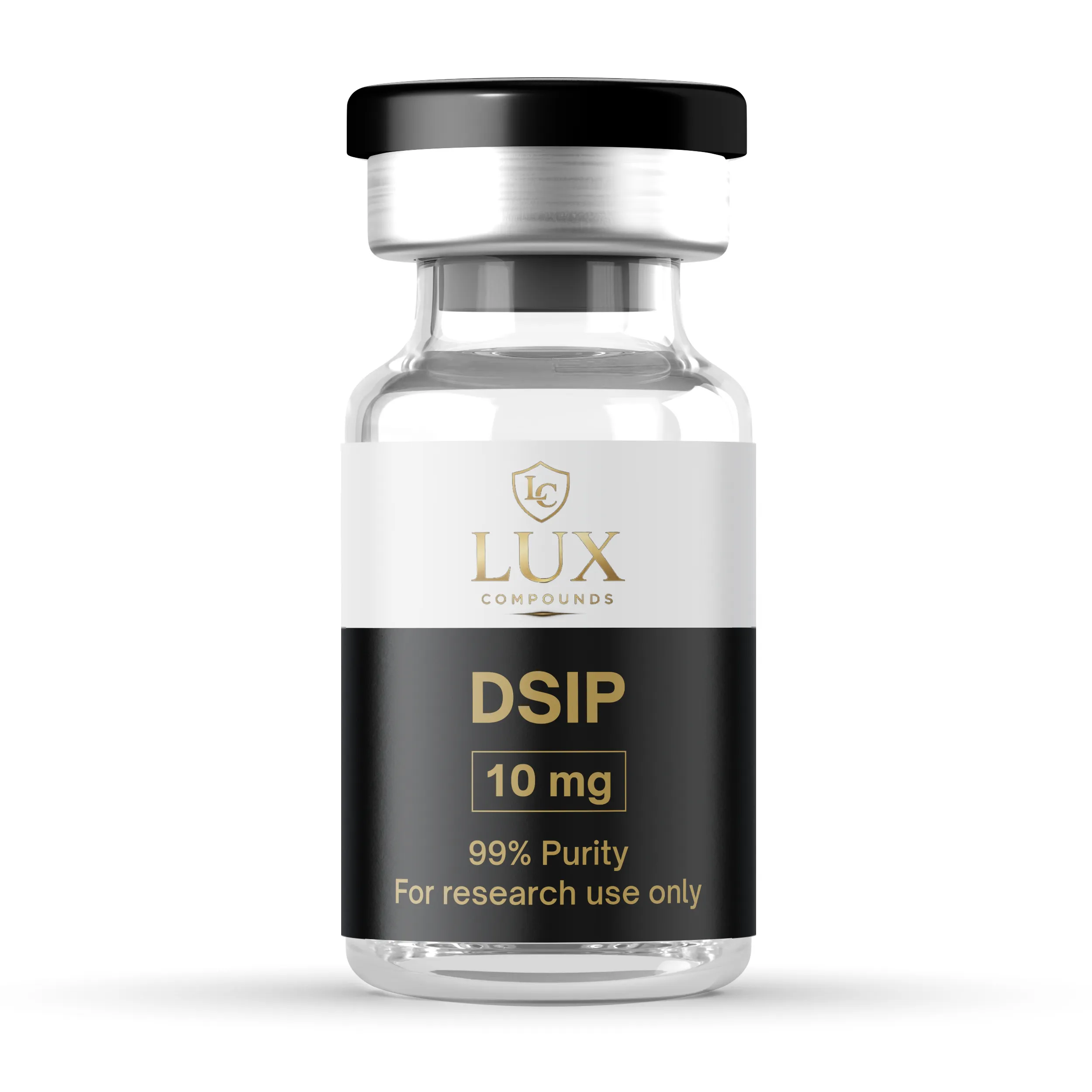
Delta-Sleep PeptideEmideltide
A 9-amino acid peptide studied for its interaction with delta-wave sleep patterns and circadian rhythm signaling, investigated for its role in sleep onset mechanisms in research models. Premium Research Peptide.
All products currently listed on this site are for research purposes only.
$59.99 Original price was: $59.99.$53.99Current price is: $53.99.
We accept :

Third Party Tested by Freedom Diagnostics
The Science, Simplified
Key insight: In research models, DSIP has been studied for its interaction with cortisol secretion and the HPA axis. This makes it a subject for studies involving stress-response signaling.
Key insight: In research, DSIP has been studied for its interaction with opioid receptors; observed effects can be blocked by naloxone, indicating direct opioid-receptor involvement. This has led to research into its role in opioid-signaling models.
What research literature describes
DSIP is characterized as a stable endogenous peptide that is naturally present in mammalian tissues.
🧿 Laboratory Handling Notes
Store lyophilized at -20°C
mild
Reconstitute with bacteriostatic water
mild
Protect from light
mild
Safety Advantage
No Determined LD50
Technical specifications for each component
🔬 Molecular Profile
What Is DSIP?
Type
Synthetic nonapeptide
CAS Number
62568-57-4
Molecular Formula
C35H48N10O15
Molecular Weight
848.8 g/mol
Amino Acids
9 residues
Sequence
Trp-Ala-Gly-Gly-Asp-Ala-Ser-Gly-Glu
🧊 Storage Requirements
Stability Information
First isolated from rabbit brain in 1977 by Schoenenberger & Monnier
Lyophilized (powder)
-20°C
protect from light
Reconstituted
2-8°C
use within 24 hours
Stability
15 minutes (plasma half-life)
if kept frozen and sealed.
📊 Physical Properties
Development History
First isolated from rabbit brain in 1977 by Schoenenberger & Monnier
Discovery
1977, Switzerland
Discoverers
Schoenenberger & Monnier
Origin
Rabbit mesodiencephalic ventricle
INN Name
Emideltide
Human Studies
1980s-present
Regulatory Status
Research compound
Common questions about DSIP
Peer-reviewed research
Not for human consumption. This product is sold exclusively for research and educational purposes. It is not intended to diagnose, treat, cure, or prevent any disease.
All research data and findings presented on this page are sourced from peer-reviewed journals and official publications. They are provided for educational reference only and should not be interpreted as medical advice or product claims.
By purchasing this product, you confirm that you are a qualified researcher and will use it in accordance with all applicable laws and regulations.